
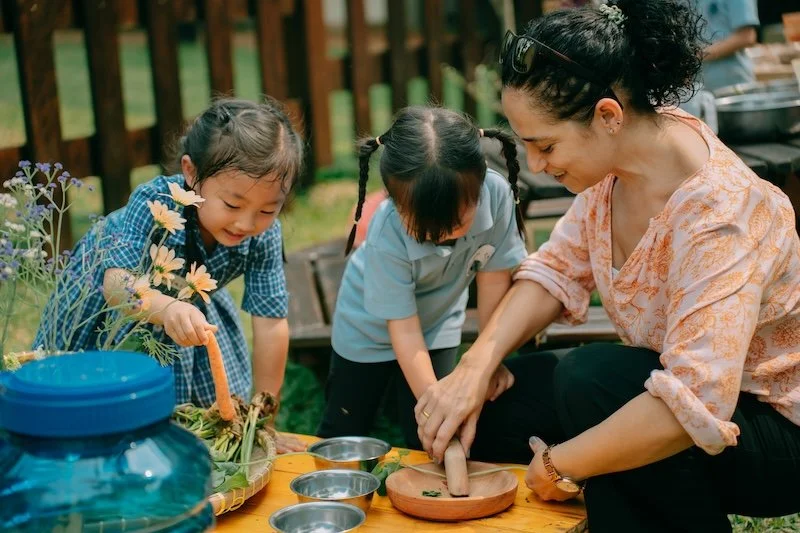
Young children learn best when they can explore and make sense of the world around them. Time outdoors supports their physical growth, builds confidence, and develops the curiosity and independence that underpin all later learning.
As James Johnston, who leads outdoor provision in the Early Years at ISJ, puts it: "Young children thrive when they have space to test ideas, move freely, and make discoveries for themselves. Outdoor learning gives them that freedom every single day."
Physical Development and Wellbeing
Young children need space to run, climb, and test what their bodies can do. Outdoors, they naturally build strength, balance, and coordination, skills that later support handwriting, sustained focus, and general classroom readiness.
Fresh air, sunlight, and open space also help regulate sleep and mood. In a busy city like Jakarta, access to safe, well-designed outdoor areas at school makes a meaningful difference to a child's daily wellbeing. Children who spend regular time outdoors tend to arrive in the classroom calmer and more ready to engage.
Cognitive and Academic Growth
The outdoors is one of the richest environments for early scientific thinking. Children notice how water moves, why shadows change, what happens when materials are combined. These natural observations lead directly to the processes of inquiry: noticing, predicting, and testing ideas.
Because outdoor experiences are open-ended, children follow their interests and stay absorbed for longer. Teachers frequently observe that children return indoors calmer and more ready to concentrate. This approach aligns closely with the principles of the British Early Years Foundation Stage, which emphasises child-led exploration as a cornerstone of early learning. At ISJ, it is embedded throughout the Pre-Prep programme.
Building Confidence and Resilience
Trying something genuinely challenging, balancing on a log, climbing a little higher, or working out how to cross an obstacle, gives children real moments of achievement. These experiences help them manage risk safely, cope with frustration, and persevere when something is difficult.
Outdoor spaces also give children more room to regulate their emotions. Physical movement, fresh air, and the relative freedom of an open space all help children process feelings and settle without the close proximity of a classroom.
Social Development
Children collaborate more naturally outdoors. They build dens, negotiate the rules of games, or work together to solve practical problems that arise organically. These everyday interactions develop communication, turn-taking, empathy, and the flexibility to adapt to others.
James Johnston remarks: "Outdoor learning lets every child find their way into the experience. Some lead, some observe, some build, others imagine. Everyone participates."
Language and Communication
Outdoor experiences prompt richer language. Children describe what they see, ask questions freely, and share ideas in a less formal setting than the classroom allows. Teachers introduce new vocabulary linked to real, tangible experiences, making learning far more memorable than a definition on a page.
Imaginative play also expands outdoors. Children create narratives, assign roles, and negotiate story directions in ways that support early storytelling, confident speech, and the development of expressive language.
Early Environmental Awareness
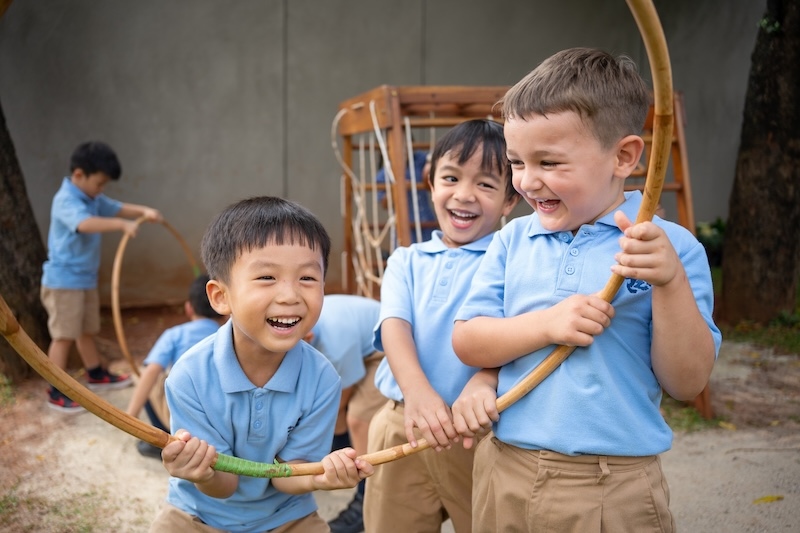
Regular time outdoors helps children develop a healthy connection to the natural world. They observe changes in plants, notice insects, and begin to understand how their actions affect the environment. Even within a large city, purposeful school grounds can provide meaningful, daily contact with nature.
This connection, formed early, builds habits of attention and care that extend well beyond the school years.
Helping All Learners Succeed
Outdoor learning suits a wide range of learners. Children who need movement engage more readily in open space, while quieter corners give others a sense of security and containment. The flexibility of the outdoor environment helps more children find a way to feel successful and included, without the structured demands that the classroom necessarily imposes.
The Role of the Teacher
Effective outdoor learning depends on skilled educators. ISJ teachers observe closely, guide thinking with well-timed questions, and connect outdoor experiences to curriculum goals without taking ownership away from the children. This balance, being present without directing, is a core element of strong early years practice.
Outdoor learning is not unstructured. It is purposefully planned and carefully observed, with teachers recording the learning they see and using it to inform what happens next.
A Space Designed for Learning
A well-designed outdoor environment includes open areas for movement, natural materials for exploration, quiet spaces for reflection, and shaded areas suited to Jakarta's climate. Thoughtful design ensures outdoor learning can take place throughout the school day, not only in ideal conditions. The ISJ campus has been developed with these principles in mind.
Extending Learning at Home
Outdoor learning extends naturally beyond school. Families can reinforce the same curiosity and confidence through simple activities: nature walks, gardening, water play, or time spent exploring freely. These moments support the dispositions children develop at school and help consolidate what they have discovered during the day.
When outdoor learning is woven into daily practice, both at school and at home, children gain a balanced foundation that prepares them well for all that follows.